
Just Jump In!

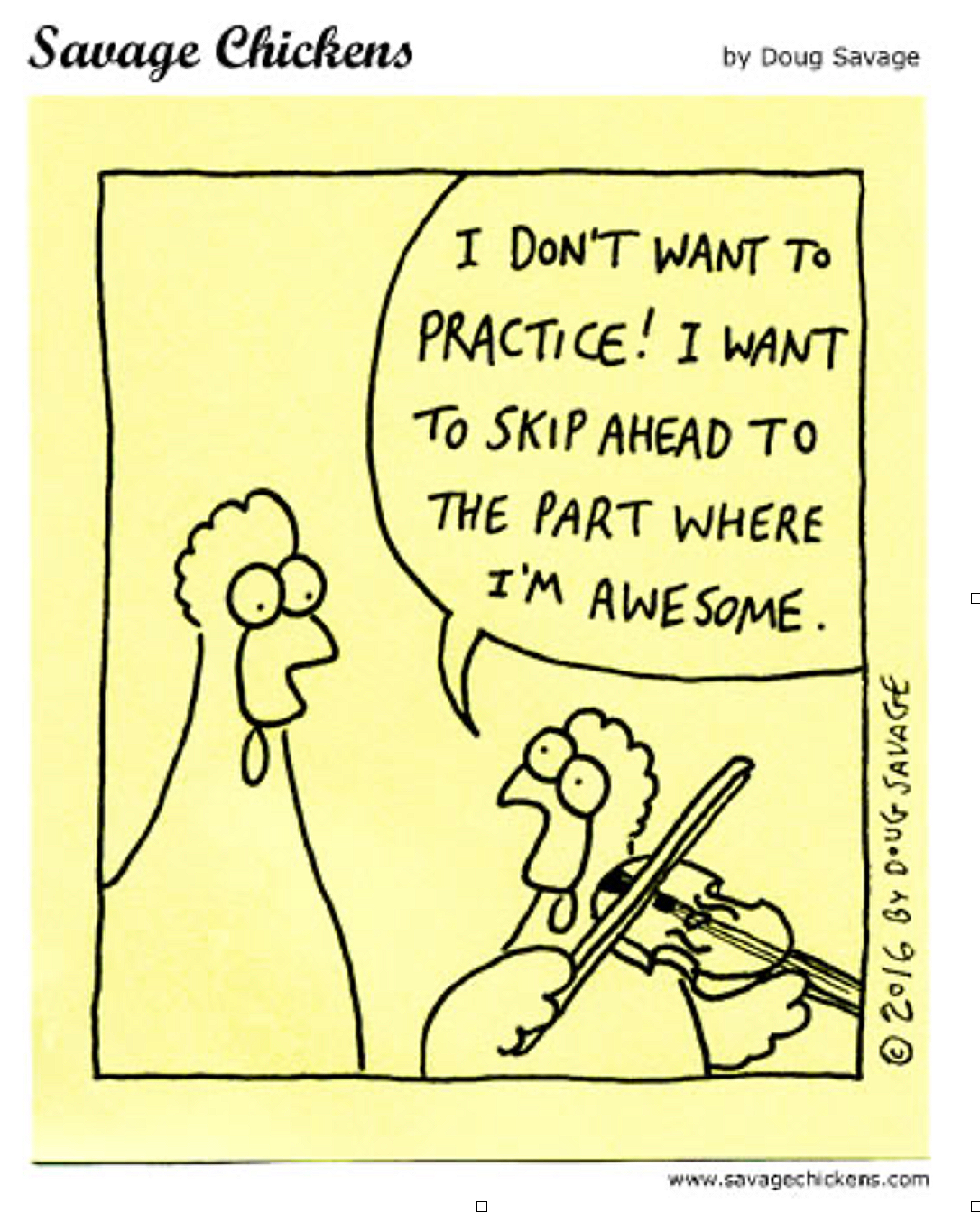
Recently I was preparing some students for a concert event. As we were doing this, the difference between practicing for performance and practicing to learn became increasingly evident to me.
When we learn something new, we break it into small steps, isolate difficulties, build on previous knowledge and understanding, and gradually, step by step, connect these individual elements into a complete piece.
When we prepare for performance, we need to practice immediate recall of everything all at once. Performers are expected to step out on stage and just play the piece - they don’t start with a tone warmup, a couple of scales, an articulation exercise, run through that tricky bit, and then play the piece - no, they just play!
In a recital or concerto performance, a performer may have done all of that backstage first. But students preparing for a student recital or a festival performance do not have the luxury of the backstage warm up - they are usually in the audience, supporting their friends and classmates, and then suddenly its their turn and up they go.
But in the lesson, we often do all the warm up and technical exercises first. So students don’t really get a chance to practice playing from a “cold start”. I realized I needed to incorporate more performance situations into the lesson.
I had read several articles about the advantages of “interleaved” practice, most recently on Noa Kageyama’s Bulletproof Musician blog, and in Molly Gebrian’s book Learn Faster, Perform Better. Interleaved practice involves alternating practice tasks with other activities, so that when you come back to the original practice task you have to also practice remembering what you had done previously. Playing the same task over and over immediately does not provide the opportunity to remember what you just did, because you only just did it! Taking time to do something else in between puts more emphasis on the remembering when you come back to it.
So I transformed the lesson routine. No technical warm ups or review pieces at the beginning! Just a quick moment to check tuning, and then straight into the performance preparation piece. After that “cold” performance we would check in on what went well and what needed work, and touch on a few spots that needed improvement. But we didn’t play the piece again, only checked on short spots. Then we would go on to a different project for a short time, and come back to the performance piece later in the lessons. Again, a straight play through of the piece. Analysis of the spots that we had worked an previously - did the changes stick? If they did, good! Assignment would be to check and make sure they were still there tomorrow. If not - “rinse and repeat” until they do. Again with a pause to do something else before checking back, to practice remembering the change.
I observed some trends among my students as we continued in this manner leading up to the concert. Yes, there was an increase in confidence, and yes, there was an increase in accuracy. But what struck me as the most positive development, was the careful thought and setting of intentions that became a habit before a performance. Instead of just grabbing the instrument and diving in, students would pause, breathe, mentally review the spots they wanted to remember, and then bring the instrument up into playing position. I wish that I had been able to harness that kind of calm forethought before performing when I was a student!
So I will definitely be including interleaved practice as a regular part of lessons from now on, as well as offering the process as a practice tip for homework.
You will notice that this story is part of a new newsletter project. A similar division between preparation and presentation also applies to writing. I have recently adopted a journaling practice, which I find valuable for working through and organizing my thoughts. But if I keep my thoughts to myself, they never get a change to grow and develop through interaction with other people. So at some point I need to just jump in, and encourage myself to present my writing the same way that I encourage my students to practice presenting their own work.
This is why we have created a newsletter, to be a place to share thoughts and demonstrate creative process. If you would like to join us in this small experiment, please subscribe. We are not committing to a specific publication schedule, so there is no danger of your mailbox becoming overwhelmed with notes from us, but if you are interested in interacting occasionally with our sporadic thoughts and ideas, we welcome your participation.
Source for Savage Chickens cartoon: https://www.savagechickens.com/2016/04/practice.html